BotW Star Fragment Locations, Farm Spots and Uses: How to Find, Farm and Spend Every Fragment in Breath of the Wild
Where BotW star fragments fall, the 9 PM to 5 AM window, the eight guaranteed pickups, the Dueling Peaks farm loop and every armor upgrade that needs one.
- Published
- Read
- 15 min
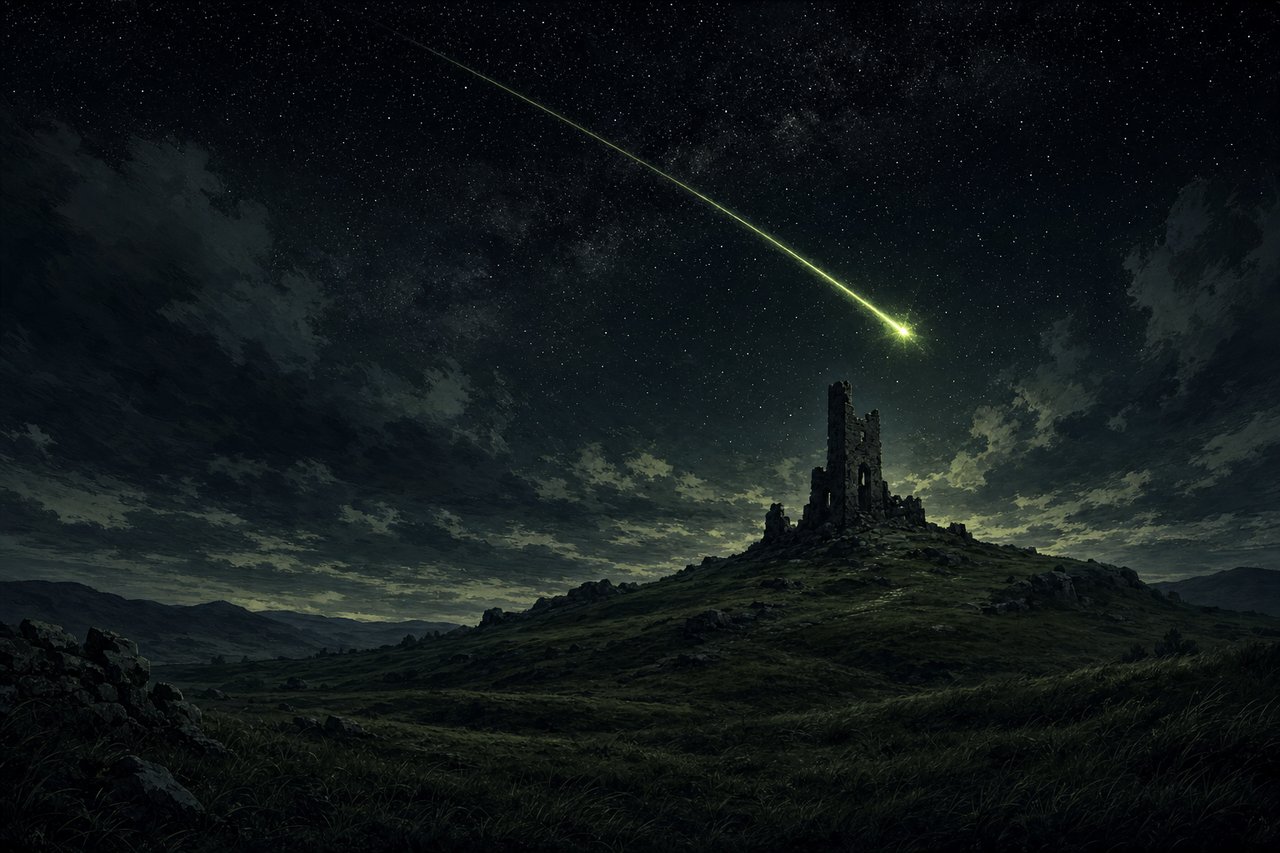
A BotW star fragment falls from the sky at night, lands somewhere inside Link’s field of view, and stays on the ground as a glowing beacon until 5:00 AM before it disappears. Nintendo built the whole mechanic around that single window: the shooting star can appear any time after 9:00 PM, the fragment sells for 300 Rupees, and 88 of them are needed to upgrade every piece of armor that asks for one. This guide covers BotW star fragment locations that are fixed and one-time, the farm routine that produces one on most nights, and all the star fragment uses, from Great Fairy upgrades down to the Kochi Dye Shop, with the Tears of the Kingdom differences at the end.
What a BotW Star Fragment Is and How It Spawns
The in-game description calls it “a mysterious stone fragment that fell from the sky” and files it under treasures rather than monster parts or food. That classification matters later, because it decides who will take the fragment and who will not. In The Legend of Zelda: Breath of the Wild, released by Nintendo on March 3, 2017 for Switch and Wii U, the fragment is the rarest renewable material in the game: no shop stocks it, Beedle will buy it but never sell it, and the only unlimited source is the night sky.
The spawn rules are simple once written down.
The shooting star can only appear at night, and night in Breath of the Wild starts at 9:00 PM. Sitting at a campfire or cooking fire and choosing to rest until night sets the clock to exactly 9:00 PM, which is the reason every farm routine begins with a bundle of wood and a fire source. From 9:00 PM the streak can appear at any point in the following hours; Game8’s item data puts the cut-off at around 3:30 AM, IGN’s guide says 3:00 AM, and player logs mostly agree that a night which reaches 3 AM without a star is a lost night. Whenever it lands, the fragment then sits on the ground as a bright golden beacon until 5:00 AM. At 5:00 AM it is gone, whether Link is a hundred metres away or still on top of a mountain.
Two more rules decide whether a spawn is actually collectable. First, the star falls within the camera’s field of view: the game renders the streak in front of Link, so the direction the camera faces is the direction the fragment lands. A player looking out over Hyrule Field will get a Hyrule Field spawn; a player facing the Lanayru Sea will get a fragment in the sea. Second, water destroys it. A fragment that lands in a lake, river or ocean disappears instantly, and one that lands on a slope beside water can roll in as it settles. Choosing a lookout with dry, flat terrain in front of it is not a detail, it is most of the strategy.
There is no verified weather or Blood Moon rule. Rain does not stop the spawn, and Zelda Wiki’s Blood Moon entry makes no mention of fragments at all, so a Blood Moon night should be treated as any other night. The one piece of folklore worth addressing is the full moon: some guides send players to Hino at Dueling Peaks Stable, who announces that night’s moon phase between 10:00 AM and 7:00 PM, and advise farming only on full-moon nights. Other players who tracked 30 consecutive attempts without watching the moon reported a fragment on 26 of them. Nintendo has documented no moon bonus, so the safer reading is that the full moon is harmless superstition.
Spotting and Chasing a Falling Star
The whole hunt is a two-phase problem: see the streak, then reach the beacon. Both phases fail in predictable ways.
Spotting depends on height and stillness. From a summit the streak is visible as a bright line drifting in from the top of the screen and the landing flash is unmistakable, a pillar of yellow light standing over the crash site. From a valley floor the same star is hidden behind a ridge and the pillar is a faint glow at best. Once the camera is set, it should not move. Every guide that reports a high success rate says the same thing: pick the direction, straighten the camera (drawing a shield squares it up), and then leave the controller alone until the streak appears. Turning the camera to check another horizon moves the spawn cone with it.
Reaching the beacon is the part that goes wrong. As soon as the flash lands, open the Sheikah Slate scope, centre the pillar of light and drop a pin. The map then shows the pin relative to every tower and shrine you have activated, and the correct move is almost never to run. Warp to the nearest activated Sheikah Tower or shrine, glide toward the pin, and cover the last stretch on foot or on a horse. Central Tower is the classic destination for a Hyrule Field landing, with the caveat that Guardians patrol its base. Hateno Tower catches most landings east of the Dueling Peaks. A pin dropped on Satori Mountain from the Ridgeland side is a long walk, a pin close to a stable is a short one, and a pin over open water is a pin to ignore.
The Sheikah Sensor+ upgrade from Purah’s lab in Hateno Village is no help in this phase. Its ping radius is short, while the beacon is visible from the far side of a region, so the scope and a pin do the locating. The Sensor is a tool for the last fifty metres in dense forest, nothing more.
Speed matters because of the 5:00 AM limit. A landing at 2:30 AM leaves roughly two and a half in-game hours, which is a few real minutes, and a fragment on the far side of a mountain range can genuinely be unreachable in that time. Horses, the Master Cycle Zero from the Champions’ Ballad DLC, and a stack of Hasty dishes made with Fleet-Lotus Seeds or Swift Carrots all shorten the run. Climbing gear and stamina food matter more than combat gear, because the fragment does not fight back and everything between Link and it is terrain.
BotW Star Fragment Locations: Fixed Pickups and the Best Farm Spots
There are two kinds of BotW star fragment locations. A small set of one-time pickups can be collected on a schedule, and a handful of lookouts turn the random nightly spawn into a routine. Both are covered here; the nightly routine itself is in the next section.
The eight guaranteed fragments
Game8’s item survey counts eight fixed star fragments in the game. They do not respawn after a Blood Moon, so each is a single pickup, but eight fragments is two full amiibo armor pieces without watching a single sky.
- My Hero, Outskirt Stable. Aliza stands under a tree by the road west of the Coliseum. Show her the Master Sword and she hands over a fragment. Requires 13 hearts to draw the sword in Korok Forest, so this one is mid-game at the earliest.
- Balloon Flight, Woodland Stable. Shamae asks Link to make barrels float. Two Octo Balloons on a barrel finish the quest and the reward is a fragment.
- Spool Bight plateau, Lanayru Sea. A metal chest on the Tal Tal Peak cliffs overlooking Spool Bight, on the hidden plateau west of the bight and southeast of Mah Eliya Shrine.
- Military Training Camp, Woodland. Warp to Woodland Tower, head to the muddy patch at the camp and pull the buried chest out with Magnesis.
- Hyrule Castle Docks. Inside the cave port under the castle, an underwater chest comes up with Magnesis.
- Thyphlo Ruins. The pitch-black ruins north of the Lost Woods hold eight chests; Zelda Wiki lists their combined contents as three Ambers, three Opals, one Ruby and one Star Fragment. The fragment’s chest sits by a raised platform with two torch stands.
- The dog at Lurelin Village. Feed it at least three pieces of meat and it leads Link to a buried fragment.
- The dog at Snowfield Stable. Same rule, three pieces of meat, one dig.
Beyond the eight, the only other non-sky source is a Lynel. Zelda Wiki records the drop as extremely rare, and player reports single it out for Silver Lynels. Nobody should fight a Silver Lynel for a fragment, but it is worth knowing that one can appear in the loot.
Farm spots that work
The best farm locations share three features: a summit with a warp point on it, a wide flat region below it, and no large body of water in the chosen line of sight.
Dueling Peaks, south summit. Warp to Shee Vaneer Shrine, climb behind it to the two statues with offering bowls, and light a fire. Facing east toward Hateno Tower puts the whole of the Dueling Peaks and Hateno corridor in view, with the tower itself as the warp destination for most landings. Facing west puts Hyrule Field and Hyrule Castle in view, with Central Tower or Riverside Stable as the destination. This is the spot most guides, including GameSkinny and Nintendo Life, settle on.
Central Tower. Standing on top of the tower and looking north so that Hyrule Castle is on the left and Death Mountain is centred covers most of Hyrule Field. The landing is often close enough to glide to directly. The Guardians at the tower’s base are the cost.
Mount Lanayru, Jitan Sa’mi Shrine. For players who want fragments and dragon parts on the same night. Naydra appears here, and the view down over the Lanayru wetlands and toward Kakariko is broad and mostly dry.
Ridgeland and Hebra towers. Higher, colder, and further from most landings; useful only if the player has already cleared the Hyrule Field farm and wants a different spawn cone.
Riverside Stable comes up repeatedly in player reports as a place where fragments seem to land, which is really a statement about how much of Hyrule Field is visible from the Dueling Peaks and Central Tower lookouts. It is a convenient destination, not a spawn point.
How to Farm Star Fragments Every Night
The farm loop is the same on every spot; only the lookout and the warp target change. It needs wood (or a campfire already on the summit), a fire source such as a fire arrow, a Flameblade, or flint and a metal weapon, and patience.
- Warp to the lookout during the day and set up the fire before dusk. Carrying five or six bundles of wood covers an evening of retries.
- Sit at the fire and choose night. The clock jumps to 9:00 PM.
- Walk to the edge, face the chosen region, square the camera and stop touching the stick.
- Wait. The streak can come at 9:05 PM or 2:40 AM. Turning the volume up helps, because the landing has a distinct sound.
- When the flash lands, scope it, pin it, and warp to the nearest tower or shrine to the pin.
- Reach the fragment before 5:00 AM and pick it up.
- Warp back to the lookout, light the fire again, and repeat.
If a night reaches roughly 3:30 AM with nothing, treat it as empty and sit at the fire until morning, then until night again. Two rests per empty night is the cost. On a spot like Dueling Peaks, the whole loop from fire to pickup runs a few real-world minutes, and the reported success rate of about four fragments in five nights holds up across multiple player logs.
Time management is the difference between a farm that yields ten fragments in an hour and one that yields three. The two rules are: never sleep while a fragment is on the ground unless it is already in reach, because a rest that crosses 5:00 AM deletes it, and never chase a beacon over water or across a mountain range with less than an in-game hour left. A skipped fragment costs one rest; a missed one costs the same rest plus the run.
A few players use Hino’s moon report to farm only on full-moon nights. The routine does not need it, but it is harmless, and if the extra step makes the wait feel shorter it costs nothing but a conversation.
Star Fragment Uses: Great Fairy Upgrades, Cooking, Dye and Selling
The star fragment uses in Breath of the Wild are listed below, in order of how hard each one is to replace.
Armor upgrades at the Great Fairy Fountains
This is the use that justifies the farm. Breath of the Wild has four Great Fairies, Cotera, Kaysa, Mija and Tera, each sealed in a flower-bud fountain that opens for an escalating Rupee fee. The maximum star rank a fairy can grant depends on how many of the four have been restored, so a full four-star upgrade needs all four fountains open. The fragment requirements, from Zelda Wiki’s per-piece upgrade tables, are:
| Armor | Star ranks that need a fragment | Fragments per piece | Other materials | Total for the set |
|---|---|---|---|---|
| Cap, Tunic, Trousers of Time (Link, Ocarina of Time amiibo) | ★ ★★ ★★★ ★★★★ | 4 (1 per rank) | Amber 1 / 3 / 5 / 10 | 12 |
| Cap, Tunic, Trousers of Twilight (Twilight Princess Link amiibo) | ★ ★★ ★★★ ★★★★ | 4 | Topaz 1 / 3 / 5 / 10 | 12 |
| Cap, Tunic, Trousers of the Hero (8-bit Link amiibo) | ★ ★★ ★★★ ★★★★ | 4 | Ruby 1 / 3 / 5 / 10 | 12 |
| Cap, Tunic, Trousers of the Sky (Skyward Sword Link amiibo) | ★ ★★ ★★★ ★★★★ | 4 | Sapphire 1 / 3 / 5 / 10 | 12 |
| Cap, Tunic, Trousers of the Wind (Toon Link amiibo) | ★ ★★ ★★★ ★★★★ | 4 | Opal 1 / 3 / 5 / 10 | 12 |
| Sheik’s Mask (Sheik amiibo) | ★ ★★ ★★★ ★★★★ | 1 / 2 / 3 / 4 = 10 | Silent Princess 1 / 2 / 3 / 4 | 10 |
| Cap, Tunic, Trousers of the Wild (all 120 shrines) | ★★★★ only | 1 | 2 Shards of Farosh’s / Naydra’s / Dinraal’s Horn | 3 |
| Ancient Helm, Cuirass, Greaves (Akkala Tech Lab) | ★★★★ only | 1 | 2 Giant Ancient Cores | 3 |
| Vah Ruta, Rudania, Medoh, Naboris Divine Helms (Champion amiibo) | ★★★★ only | 1 | 2 Giant Ancient Cores | 4 |
| Diamond, Ruby, Sapphire Circlet; Topaz Earrings (Gerudo Town jeweler) | ★★★ ★★★★ | 2 (1 each) | Gems 6 / 10 | 8 |
| All star-fragment armor in Breath of the Wild | 88 |
Two things stand out in that table. The amiibo outfits are the fragment sink: 60 of the 88 go into the five sets, and every one of those sets needs an amiibo figure scanned to exist at all. And the Champion’s Tunic, the Snowquill, Zora, Sheikah and Gerudo sets, the Barbarian and Climbing gear, the Amber Earrings and the Fierce Deity set all upgrade without a single fragment, so a player who owns no amiibo needs only the Wild set, the Ancient set and the jewelry: 14 fragments, most of which the eight fixed pickups cover.
Selling
Every merchant pays 300 Rupees for a fragment, the same as a Diamond. Beedle buys at that price at any stable. Selling makes sense only after the upgrades a player wants are done, because 300 Rupees is a few minutes of Rupee farming and a fragment is a night of waiting. Kilton is not an option at all: his Fang and Bone shop converts monster parts into Mon, and a treasure item has no Mon value.
Cooking
Dropping a fragment into a Cooking Pot guarantees the dish’s critical bonus, the same roll that Dragon parts and a Blood Moon night can trigger: an extra heart, an extra wheel of stamina, a longer duration or a stronger effect level. The fragment adds no effect of its own and no recipe calls for one. The cooked dish sells for a fraction of the 300 Rupees the raw fragment would have fetched, so the only sensible reason to cook one is a game-ending moment where a single guaranteed critical matters. Everyone else should use a Dragon Scale.
Dye
The Kochi Dye Shop in Hateno Village accepts a fragment as an ingredient for white dye. Since the same shop takes far cheaper white ingredients, this is trivia rather than a plan.
Mistakes, Kilton and the Tears of the Kingdom Difference
The failures that cost the most fragments are not exotic. The camera drifts while waiting and the spawn lands behind a ridge. The player rests at a fire with a fragment still on the ground and crosses 5:00 AM. The chosen line of sight includes Lake Hylia or the Lanayru Sea and the star drops into it. The player runs from the summit instead of warping to a tower and arrives at 5:10 AM. And the most common one: selling fragments early for 300 Rupees each, then scanning a Link amiibo weeks later and discovering that a single Tunic of the Wild upgrade to four stars wants three of them plus two of Naydra’s horns.
Kilton deserves a separate line because so many players try him. The Fang and Bone only trades monster parts for Mon, the star fragment is a treasure, and the shop will not even list it. The Great Fairies are the fragment’s real market.
Tears of the Kingdom, released by Nintendo for Switch on May 12, 2023, keeps the spawn window, the 5:00 AM despawn and the Great Fairy role, and then gives the fragment a second life through Fuse. Melded to a weapon it adds one point of attack and throws glowing sparks on every swing; melded to a shield it lights the area around Link, which is a real answer to the Depths; attached to an arrow it flashes on impact. IGN’s item data lists the Tears of the Kingdom sell price at 200 Rupees rather than 300, and the armor list grows: the Awakening set from the Link’s Awakening amiibo joins the Time, Twilight, Hero, Sky and Wind sets, the circlets and earrings, Sheik’s Mask and the Wild set, and the per-tier gem counts are steeper. The new hunting method is skydiving. Launching from a Skyview Tower between 9 PM and 5 AM gives a chance of a fragment falling beside Link, and the Glide set matches the fall speed closely enough to catch it in the air.
None of that changes the Breath of the Wild routine. A player on the Dueling Peaks summit at 9:00 PM with a fire burning and the camera locked on Hateno Tower is doing the same thing in 2017 and today, and the fragment that lands at 2:40 AM still has to be reached before the clock reads 5:00.
Frequently asked questions
Where do star fragments spawn in BotW?
Anywhere on the overworld, but always inside the area Link is currently looking at. The fall is rendered in front of the camera, so the landing zone is effectively chosen by where you stand and face. High lookouts over flat ground work best: the Dueling Peaks summit facing Hateno Tower, Central Tower facing Hyrule Field, or Mount Lanayru above the Lanayru wetlands. Fragments never spawn indoors, in shrines, or in the Great Plateau tutorial area before the paraglider.
What time do star fragments fall in Breath of the Wild?
The window opens at 9:00 PM in-game and the shooting star can appear at any point through the small hours, with most reports clustering before about 3:30 AM. Once it lands, the fragment stays on the ground until 5:00 AM and then vanishes. Sitting at a campfire and choosing night sets the clock to exactly 9:00 PM, which is why every farm routine starts with a fire.
What do you do with star fragments in BotW?
Four things: hand them to a Great Fairy as an upgrade material, sell them to any merchant for 300 Rupees, drop one into a Cooking Pot to force a critical bonus on the dish, or use one at the Kochi Dye Shop in Hateno Village for white dye. Armor is the only use that cannot be replaced by something cheaper, so most players bank every fragment for the amiibo sets, Sheik's Mask and the jewelry.
Can you farm star fragments in Breath of the Wild?
Yes, and the supply is unlimited. Each night has a chance of one shooting star inside your field of view, so the routine is: warp to a high spot, light a fire, sleep until night, hold the camera still, wait for the streak, pin the beacon with the scope, and travel to it before 5:00 AM. Most players report a fragment on the large majority of nights, with occasional empty nights in between.
How much do star fragments sell for in BotW?
300 Rupees each, from any general-store merchant or from Beedle at a stable. That is the same price a Diamond fetches, which makes the fragment one of the highest-value single items in the game. Selling is only sensible once every star-fragment armor upgrade you care about is finished, because the fragment is far harder to replace than the Rupees.
Do star fragments despawn if you do not pick them up?
They do. A landed fragment glows as a beacon until 5:00 AM in-game and then disappears, whether or not you were on your way. Any fragment that rolls into a lake, river or the sea is lost the moment it touches water. Time-skipping at a fire while a fragment is still out is a gamble, so collect first and rest afterwards.
Does a full moon increase star fragment spawns in BotW?
Nintendo has never documented a moon-phase bonus and the evidence is player anecdote. Some farming guides recommend asking Hino at Dueling Peaks Stable about the moon and only farming on full-moon nights; other players who tracked dozens of runs report similar results on any night. Treat the full moon as a harmless superstition rather than a requirement.
Can you buy star fragments in Breath of the Wild?
No. No shop, stable vendor or traveling merchant stocks them, and Beedle only buys, never sells. The only ways to get one are a shooting star, one of the eight one-time pickups (chests, dogs and two side quests), or a very rare drop from a Lynel. Everything beyond the fixed eight has to come from the night sky.
Which armor needs star fragments in BotW?
The five amiibo outfits (Time, Twilight, Hero, Sky and Wind), Sheik's Mask, the Diamond, Ruby and Sapphire Circlets, the Topaz Earrings, the Ancient set, the four Divine Helms and the Wild set. Everything else in the game, including the Champion's Tunic, the Snowquill and Zora sets and the Amber Earrings, upgrades without a single fragment. The full BotW total across every piece is 88.
How many star fragments do you need to upgrade all amiibo armor?
Each Cap, Tunic and Trousers of Time, Twilight, the Hero, the Sky and the Wind takes one fragment per star rank, so 4 per piece and 12 per three-piece set. All five sets together need 60 fragments, plus 10 for Sheik's Mask if you own the Sheik amiibo. That is the bulk of the 88-fragment total, which is why amiibo owners are the ones farming every night.
Can Kilton use star fragments?
No. Kilton's Fang and Bone shop only converts monster parts into Mon, and a star fragment is filed under treasures, not monster parts, so it has no Mon value at all. If you want Mon, sell Lynel hooves and Guardian parts instead. The fragment's own currency is Rupees, and its real value is at a Great Fairy Fountain.
Are star fragments worth cooking with?
Almost never. A fragment adds no effect of its own; it only guarantees the critical bonus a dish can roll anyway (an extra heart, extra stamina, a longer or stronger effect). A dish with a fragment in it sells for a fraction of the 300 Rupees the raw fragment fetches, and no recipe requires one. Use Dragon parts for duration instead and keep the fragment.
Where is the star fragment chest near Spool Bight?
On the hidden plateau west of Spool Bight in the Lanayru Sea, southeast of Mah Eliya Shrine and up on the Tal Tal Peak cliffs. Warp to the shrine, climb onto the plateau and look for the metal chest. It is one of the eight one-time star fragments and does not respawn after a Blood Moon, so it is a single 300-Rupee pickup, or a single upgrade material.
Star fragments TotK vs BotW: what changed?
The spawn window, the 5 AM despawn and the Great Fairy role carry over to Tears of the Kingdom. What is new is Fuse: a fragment on a weapon adds one attack and a shower of sparks, on a shield it lights the area around Link, and on an arrow it flashes on impact. Fragments can also be caught mid-air while skydiving from a Skyview Tower, and IGN's item data lists the sell price at 200 Rupees instead of 300.
Can you catch star fragments while skydiving in Tears of the Kingdom?
Yes. Launching from a Skyview Tower between 9 PM and 5 AM gives a chance for a fragment to fall alongside Link, and it can be grabbed in the air or followed to the ground. The Glide set matches the falling speed closely enough to line up a catch. A Zonai flying build covers the distance to a far beacon faster than any horse.
Do Lynels drop star fragments in BotW?
Extremely rarely. Zelda Wiki records the drop as possible from Lynels, and player reports single out Silver Lynels, but the odds are low enough that fighting one for a fragment is a poor trade of weapons for a maybe. A Lynel is worth fighting for its bow, hooves and Guts; a fragment from the corpse is a bonus, not a plan.
Does the Sheikah Sensor+ help find star fragments?
Not during the hunt. The Sensor+ from Purah's lab pings registered Compendium entries within a short radius, while a landed fragment is marked by a pillar of light visible from across a region. The reliable tool is the Sheikah Slate scope: sight the beacon, drop a pin, then warp to the nearest tower or shrine and close the distance on foot or on horseback.